BOOK APPOINTMENT
Pain can wear you down, draining your energy slowly day after day. It may settle in your neck after long work hours, throb in your knees when you climb the stairs, or create tight knots across your shoulders until turning your head becomes uncomfortable. Many people use medication to manage aches quickly, but the relief may not always last.
That’s where TCM pain management may offer a complementary approach. Traditional Chinese Medicine considers the body as a whole rather than focusing only on the painful area. Practitioners assess your overall health and may use traditional techniques to understand factors contributing to your discomfort.
It combines traditional methods such as acupuncture, cupping, and herbal remedies to help manage discomfort, support circulation, and promote balance. This guide explains how TCM pain management works and why more people are considering this approach today.
TCM for chronic pain considers patterns involving Qi (the body’s energy) and blood. In TCM theory, these are believed to flow through pathways called meridians. When these pathways are considered obstructed by factors such as injury, muscle tension, cold, or stress, discomfort may occur.
A TCM physician does not assess pain alone. They may ask about your sleep, diet, stress levels, and daily habits. This broader assessment helps them understand your overall health pattern rather than focusing only on where it hurts.
What stirs up pain, according to TCM:
| Cause | What It Means |
| Blocked Qi | Qi is considered restricted along a pathway, sometimes associated with stress or muscle tension. |
| Blood stagnation | Blood circulation is considered impaired, which may contribute to stiffness or dull discomfort. |
| Cold invasion | Exposure to cold is traditionally believed to aggravate discomfort in muscles or joints. |
| Weak Qi or blood | Reduced Qi or blood is traditionally associated with persistent, dull discomfort. |
TCM for chronic pain may involve several traditional therapies. Here are some commonly used approaches.
Acupuncture uses thin, sterile needles inserted at specific points on the body. These points are traditionally located along meridians associated with different areas and functions of the body.
From a modern perspective, acupuncture may influence the nervous system and pain-processing pathways. For many people seeking pain management in Singapore, the sensation is mild, although experiences vary. Sessions commonly last around 20 to 40 minutes, depending on the treatment plan.
Acupuncture may be used as part of care for:
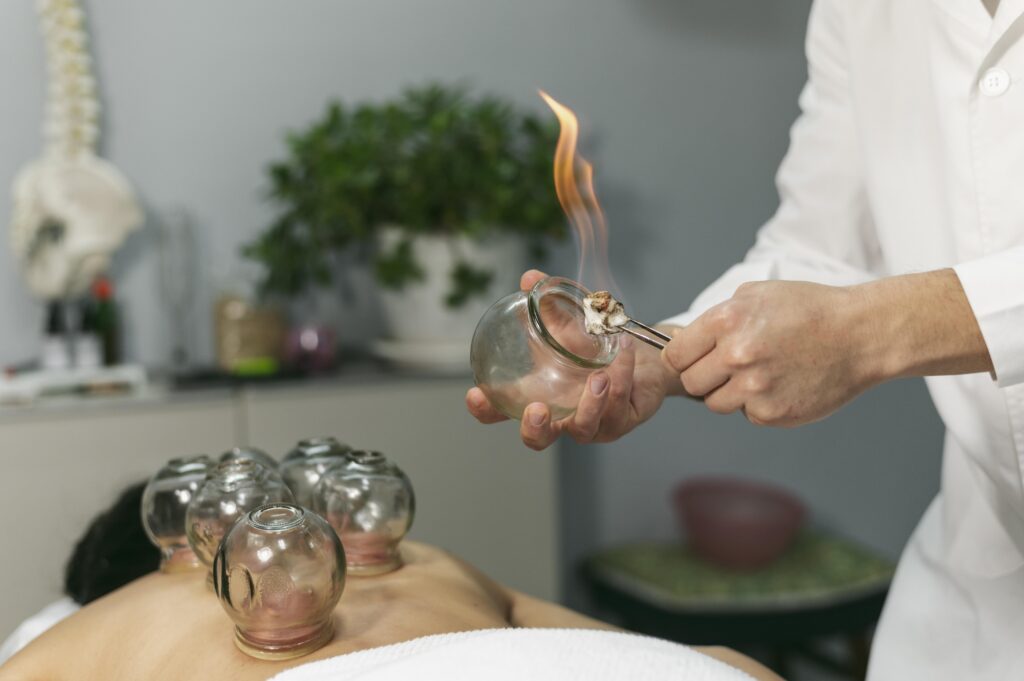
Cupping involves placing glass or silicone cups on the skin to create suction. This traditional technique may help relax tight muscles and support local circulation. It is commonly used alongside other TCM therapies for muscle tension and discomfort.
After a session, temporary round marks may appear on the skin. These usually fade within several days, although the duration varies. Cupping is often used for areas such as the back and shoulders.
| Cupping Type | Best For |
| Dry cupping | General muscle tightness and stiffness |
| Wet cupping | Selected conditions under professional guidance |
| Moving cupping | Larger areas such as the back and thighs |
Tui Na is a hands-on massage technique in which practitioners may press, knead, or stretch affected areas to ease muscle tension and support comfortable movement. People seeking pain management in Singapore may consider this traditional technique for shoulder, neck, and back discomfort associated with posture, prolonged desk work, or repetitive movements.
TCM physicians may use personalised herbal formulas alongside other treatments as part of a broader care plan. Ingredients such as ginger, turmeric, and other traditional herbs are used according to individual TCM patterns. Herbal preparations may be provided as teas, capsules, or powders, with the appropriate formula selected by a qualified practitioner.
Herbs commonly used in traditional TCM formulas include:
Your physician starts with a consultation. They ask about your symptoms, check your pulse, and discuss your daily habits. They then create a treatment plan suited to your needs.
Your first visit will likely include:
Mild pain may improve after a few visits, although progress can be gradual. Pain that has persisted for months or years may require weekly attention over a longer period. Your physician monitors your progress and adjusts the approach as your condition changes.
Chronic pain does not have to control your daily life. TCM pain management may offer a complementary approach to managing discomfort while supporting your body’s natural processes. It may help ease muscle tension and promote circulation, while personalised traditional therapies support your overall well-being.
Your practitioner should design a plan according to your individual needs, as one approach may not suit everyone. If aches and stiffness have gradually affected your quality of life, book a consultation with a registered TCM practitioner in Singapore to discuss suitable care.
Mild pain may improve after one or two visits, while pain that persists for months may require weekly care for several weeks. Your practitioner can monitor your progress and adjust your treatment plan as your body responds.
Most people feel a mild tingling sensation rather than a sharp jab. The needles are very thin and inserted carefully. Many patients find acupuncture relaxing and may even become drowsy while the needles are in place.
Yes, cupping can leave round marks after a session. These marks usually fade within several days. They are a common temporary effect of cupping and generally do not cause lasting changes to the skin.
Always tell your physician about any medicines or supplements you take. Some herbs may interact with certain medicines, so sharing your medical information helps your physician develop a safer and more suitable treatment plan.
Check that your practitioner is registered with the Traditional Chinese Medicine Practitioners Board. Look for clinics with clear information, positive reviews, and practitioners who explain your treatment plan clearly and answer your questions.
Quick Links
Address
Blk1,#02-55 Tanjong Pagar plaza Singapore 082001
MON- SUN : 10AM - 9PM
Call Us
Location
 Operating Hours: 10:00am-9:00pm daily including public holidays.